
-
Room 501, Building B, No. 666 Lugu Avenue, Yuelu District, Changsha City, Hunan Province, 410205, China

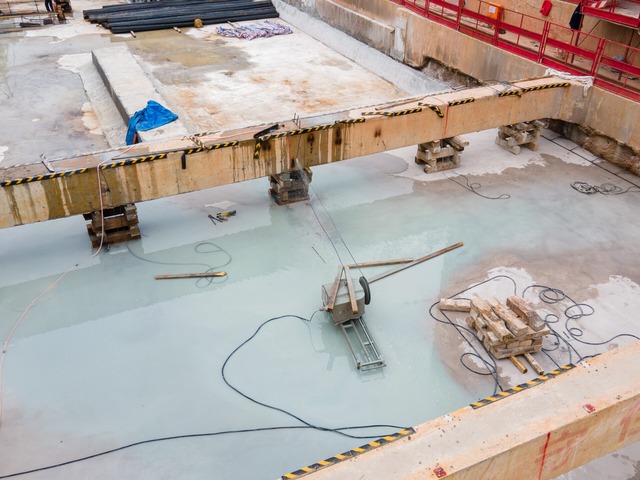
Choosing the Right Crawler Wire Saw Machine for Your Job Site
Crawler, track-mounted, or twin-pulley? A practical guide to matching wire saw machine type, power rating, and wire diameter to your concrete cutting project.
Choosing the Right Crawler Wire Saw Machine for Your Job Site
A crawler wire saw machine with rubber-tracked mobility is the workhorse of large-scale concrete demolition — it carries its own drive and hydraulics, travels along the cut line without rails, and cuts continuously through heavy rebar. The 22 kW all-in-one crawler handles typical reinforced slabs and bridge soffits; the 30 kW version takes on heavier rebar and deeper single-pass cuts. Both share the same crawler frame, hydraulics, and control panel, so a contractor only needs to learn one platform. The integrated wire storage drum and remote-control pendant cut setup time to minutes, and the rubber tracks handle muddy or uneven job sites that would stop a wheeled machine.
Step 1: Match Power to Your Deepest Cut and Rebar Density
Start by measuring the deepest single pass your job requires. A foundation slab, bridge deck, or pile cap over 600 mm with heavy rebar needs at least 30 kW. Light residential slabs under 400 mm are comfortably handled by 11–22 kW machines. The rule of thumb used on real job sites: 22–37 kW for typical bridges and foundations; 37–55 kW for mass concrete, dams, and quarry work. Higher power gives faster wire speed and more square meters per hour, but also higher fuel and wear cost, so right-sizing the motor saves you from paying for capacity you never use.
Step 2: Twin-Pulley vs Single-Pulley for Deep Cuts
For typical reinforced concrete walls, columns, and beams, a single-pulley crawler is the dependable default. For mass concrete, dams, and quarry block extraction, a twin-pulley crawler maintains higher wire tension over long loops and deeper cuts, translating directly into faster penetration on hard aggregate and a longer working life between wire changes. The twin-pulley configuration is the right answer when the cut is deep, the loop is long, and the material is hard.
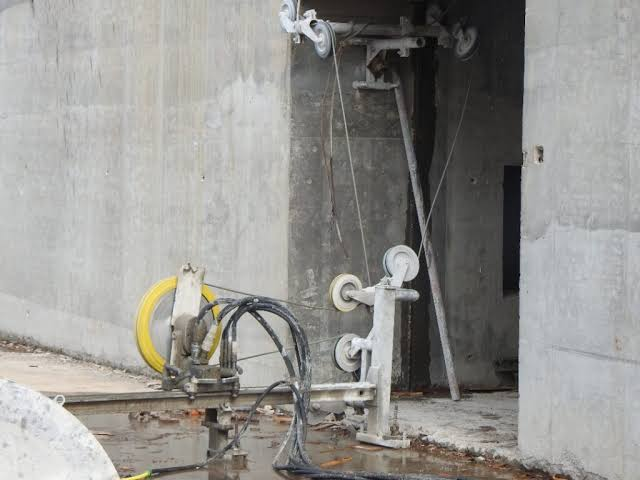
Step 3: Wire Diameter and Loop Length Compatibility
Most crawler wire saw machines accept 8–12 mm diamond wire. Confirm your preferred wire type — electroplated for rebar-heavy bridges and precision partial demolition, or sintered for general demolition, underwater cutting, and mass concrete removal — fits the machine’s pulleys and the loop length your project requires. A crawler wire saw machine running the wrong wire diameter wastes power and accelerates wear.
Kowis Crawler Wire Saw Range
Kowis builds the crawler all-in-one machine (22/30 kW), the standard crawler (22/37/55 kW), the twin-pulley crawler (22/37/55 kW), and the track-mounted wire saw (11/22/37 kW) — all factory-direct with 12-month warranty and lifetime technical support. Tell us your deepest cut, rebar density, and material, and we will recommend the right model with specs and pricing within 24 hours.